"The Pastor" by Eugene Peterson
A short review of Peterson's story of pastoring

Written in 2013, I revisited this today as I prepared my Thirdmill Seminary tutorial
I never wanted to be a pastor. I always said I didn’t want to be one because I grew up with one (my Dad) and therefore knew the underbelly of pastoral ministry personally. I think in reality, I didn’t think I could live up to the standard he set.
Instead of pastoring, I chose to work with the church. That changed in my mid-40’s as I accepted the call to be a pastor. A little personal maturity, an expanded understanding of what it means to be a pastor, and the opportunity to church-plant led to this change.
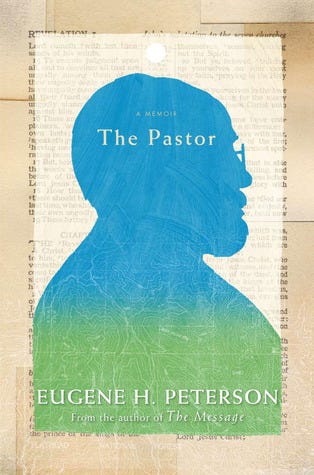
With this background, I picked up Eugene Peterson’s memoir appropriately titled “The Pastor” and read it in eager anticipation of the secret to the new calling. I never found the secret. Instead, Peterson has written an honest, wonderfully written reflection on his life, 30 years of which were spent pastoring a church outside of Baltimore, MD, USA. As he says in the afterward:
As I look back on a lifetime in the pastoral vocation, what I remember most is a kind of messiness: a lot of stumbling around, fumbling the ball, losing my way, and then finding it again. It is amazing now that anything came of it.
Peterson, author of The Message: The Bible in Contemporary Language, is a Presbyterian, so I have a natural affinity for him. As he tells his story of growing up in the wilds of Montana, to moving East for university, to growing into his identity as a pastor, Peterson communicates as a wise old grandfather with a wonderful gift of storytelling.
As I read, I had the image of sitting next to him, drinking coffee together, and listening to story after story of his life in ministry.
This is not a theological textbook. There are times while reading that I had questions which went unanswered. But answering all my theological questions was not the intention of “The Pastor”. It is one man’s story. His story of love for his God, his wife, family, and his people, the people he was called to pastor.
I can relate to his calling to be a pastor: It had taken a long time to come to realize that I was a pastor... It was a good feeling, this vocational clarity, a way of work that fit who I was. Not just a job so that I could make a living but a way of living that was congruent with what I had spent all my life becoming. It had taken a long time. It felt like an arrival at an appointed destination.