Worship For All
Making room for those on the margins during our public worship

This past week, it was “Youth Sunday” at our church, New City South (PCA). I knew something was up when two young teens greeted me at the door with bulletins. Although supported by adults, there were probably 10 young people playing instruments (violin, trumpet, piano, cello, etc.), and several others helped in other ways. Of course, Pastor Roy Hubbard led the service, and we had the privilege of hearing Pastor Thurman Williams preach from Luke 9.
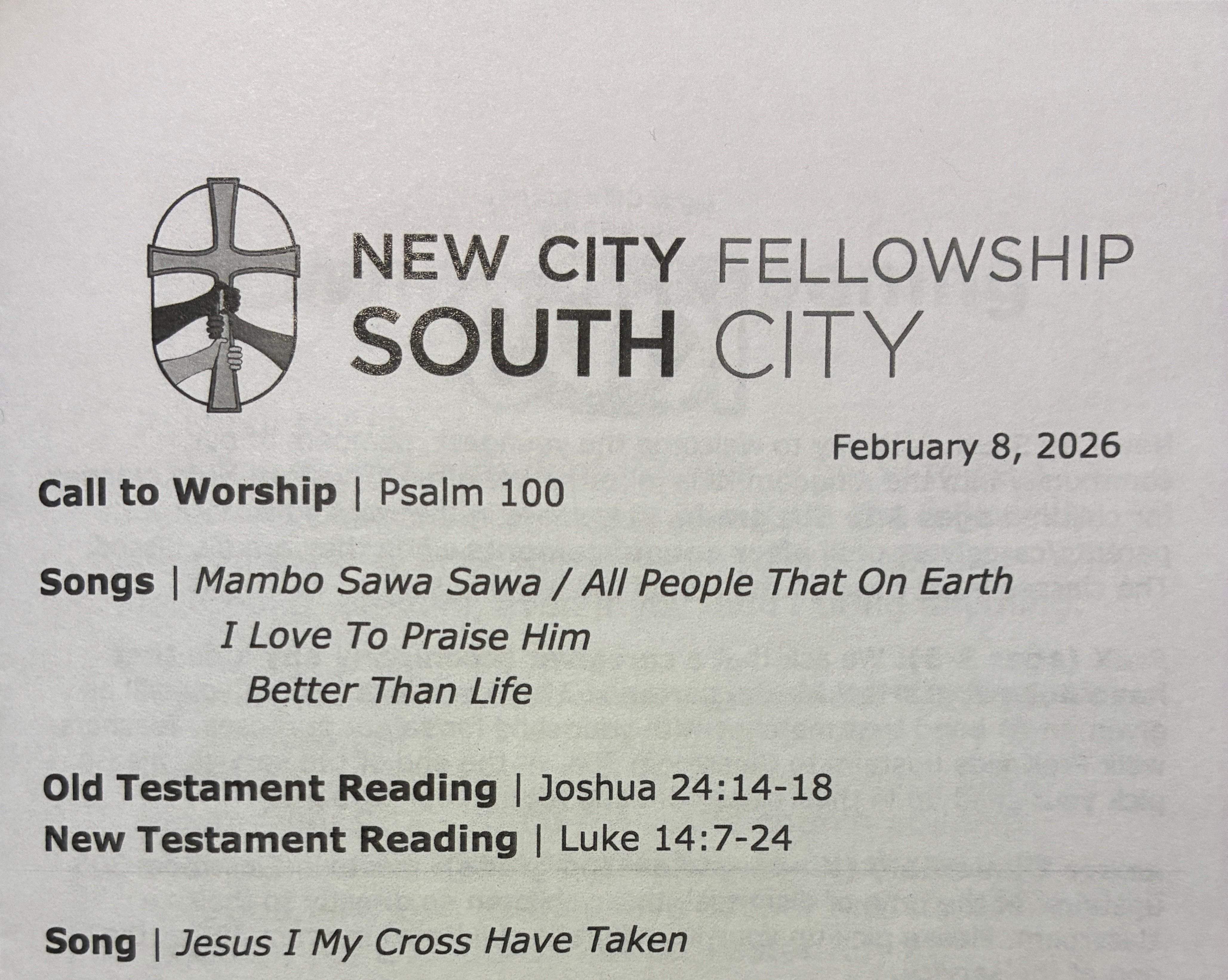
It was great to see so many teens participating in the service, which speaks to the efforts of the youth leadership who are primarily volunteers. For me, the high point of the service was the reading of Joshua 24 by a blind teenager from his Braille Bible.
I’m getting choked up just thinking about it.
He was led up to the front by another member of the youth group and read five verses. Yes, he stumbled over a few words, and his voice was halting. He took longer than most would have taken to read that short passage.
But there was a profound message in that moment. As he read, “Choose for yourselves this day whom you will serve” (Josh 24:15), I could not help but think of the God we serve who will “Defend the weak and the fatherless; uphold the cause of the poor and the oppressed.” (Ps 82:3)
The “worship experience” so often becomes a production of such high quality, I wonder if the people God truly has his eye on - “the poor, the crippled, the blind and the lame” (Luke 14:21) - would even be welcome to participate. I’m not arguing for shoddy public worship in which leaders give little attention to the details of what happens.
But I am arguing that our public worship should be welcoming to all. That we make efforts to include those on the margins and consider how outsiders (1 Cor 14:23-25) might view what happens when we gather for worship. If there’s no room for the child of Christians whose eyes don’t function as they should, is there room for the person on the outside of the faith who has made devastating life choices?
Yes, worship is primarily for our Father in heaven. We worship in the way He directs (regulative principle of worship), but I think this also means that we make room for people our Father welcomes - the lost, the broken, and yes, the blind.
May our public gatherings on Sunday be spaces where all are welcomed. May they be worship for all.
Chris, great piece. I highly encourage you to check out the work CDM is doing to promote intergenerational worship. Their work helps us in the endeavor to have worship for all.
https://teachustoworship.org/